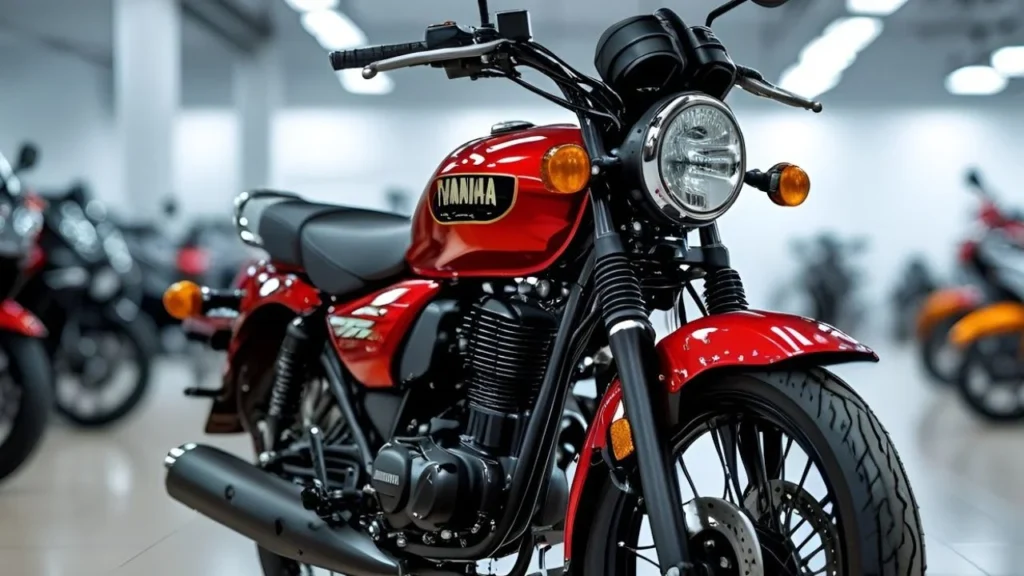
In the history of Indian motorcycles, very few names carry as much emotion and respect as the Yamaha RX100. It was not the most expensive bike, not the most fuel-efficient, and not loaded with features. Yet, it became a legend. Even today, decades after it was discontinued, the RX100 is remembered, restored, raced, and talked about with pride.

So how did a small 100cc two-stroke motorcycle leave such a deep mark on India’s roads and hearts? The answer lies in its timing, performance, simplicity, and the strong emotional connection it built with riders.
The Arrival That Changed Everything
The Yamaha RX100 was launched in India in 1985, at a time when the motorcycle market was very basic. Most bikes were slow, heavy, and focused only on mileage. Speed and excitement were not priorities back then.
When Yamaha introduced the RX100, it felt completely different. It was light, fast, and had a sharp exhaust sound that immediately stood out. For young riders, it was not just a bike—it was freedom, style, and power packed into a small machine.
Simple Design, Strong Personality
The design of the RX100 was very simple, but that simplicity became its identity. It had a clean round headlamp, flat seat, chrome fenders, and a slim fuel tank. There were no extra panels or complicated shapes.
Because of its lightweight body, the bike looked compact but aggressive. The riding position was comfortable, and the narrow frame made it easy to handle in traffic. The RX100 proved that you don’t need fancy design to look iconic—clarity and purpose are enough.
The Heart of the Legend: Engine & Performance
What truly made the RX100 special was its 98cc two-stroke engine. On paper, the numbers looked small, but on the road, it felt like a rocket for its time.
-
Power output was around 11 bhp
-
Top speed was close to 100 km/h
-
0–60 km/h came very quickly due to strong acceleration

The two-stroke engine delivered instant power. Twist the throttle, and the bike surged forward without delay. This quick response made it extremely fun to ride, especially for young riders and racers.
The sound of the RX100’s exhaust became legendary. Even today, people can recognize an RX100 just by hearing it from a distance.
Ride & Handling: Light, Fast, and Fun
One of the biggest strengths of the RX100 was its lightweight chassis. Weighing just around 103 kg, the bike felt easy to control in all conditions.
-
City riding was effortless
-
Cornering felt confident
-
Narrow roads and traffic were no problem

The suspension was basic but effective for Indian roads of that era. Combined with a strong frame, the RX100 felt stable even at high speeds. This made it popular not only on roads but also in local racing and drag events.
Mileage vs Performance: A Fair Trade
The RX100 was never famous for mileage. Being a two-stroke, it consumed more fuel compared to four-stroke bikes.
-
Average mileage: 25–35 km/l
But riders didn’t mind. At a time when excitement was rare, the RX100 gave people something new—performance at an affordable price. For many, the joy of riding was worth the extra fuel cost.
Why It Became a Youth Icon
The RX100 quickly became a symbol of youth and rebellion. College students, first-time job holders, and bike enthusiasts all wanted one.
It was:
-
Fast
-
Loud
-
Stylish
-
Easy to modify

Many owners customized their RX100 with performance exhausts, paint jobs, and tuning. It became common to see RX100s dominating streets and racing scenes across India.
The End of an Era
Despite its popularity, the RX100 was discontinued in 1996. The main reason was strict emission norms. Two-stroke engines produced more pollution, and Yamaha had to move on to cleaner four-stroke technology.
Even after production stopped, the RX100 refused to die. Used models became more valuable, and well-maintained RX100s started selling at high prices in the second-hand market.
RX100 Today: More Valuable Than Ever
Today, a good condition Yamaha RX100 can cost more than many new bikes. Restored models are treated like collectibles. Some owners refuse to sell their bikes at any price.
For many riders, the RX100 represents:
-
Nostalgia
-
Pure mechanical riding
-
A time when bikes had raw character

Final Verdict
The Yamaha RX100 was not just a motorcycle—it was an emotion. Its powerful two-stroke engine, lightweight design, and unforgettable sound made it a once-in-a-generation machine. Even after decades, it continues to inspire love and respect.
In a world full of technology and electronics, the RX100 reminds us of a simpler time—when riding was raw, loud, and deeply personal. That is why the Yamaha RX100 will always remain India’s biggest two-stroke legend.